Where fission and fusion converge.
Hybrid Technology
Among fusion concepts, Zap's is exceptionally well-matched to hybrid fusion-fission applications, which unlock new possibilities in nuclear power. By combining fusion neutrons with fission fuels, a hybrid platform can generate clean energy while treating and extracting value from waste fuels.
-
-

-
-
Lithium 3 Li
-
Fusion neutrons and fissile material
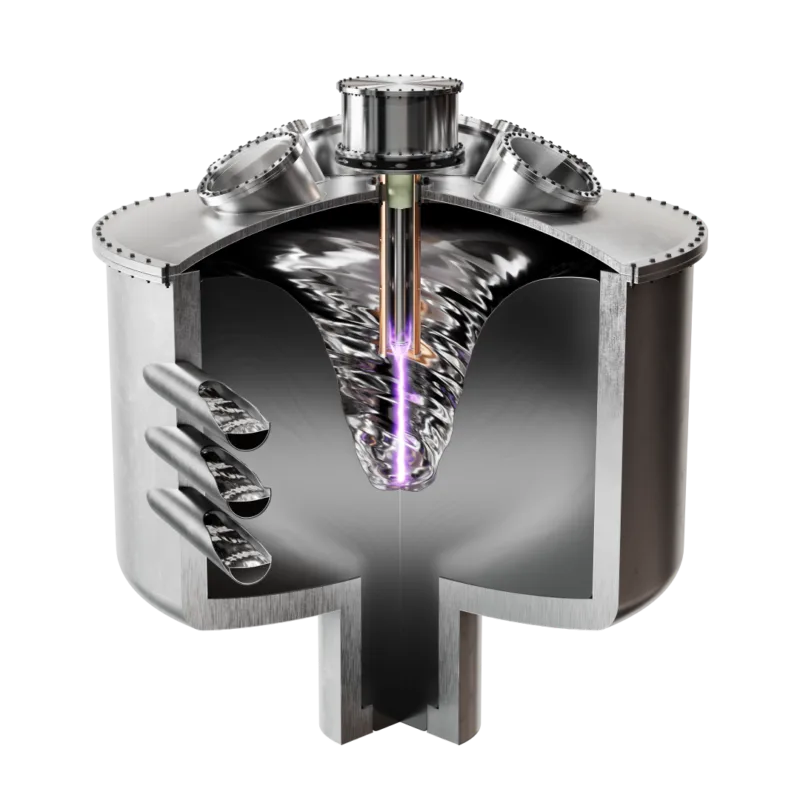
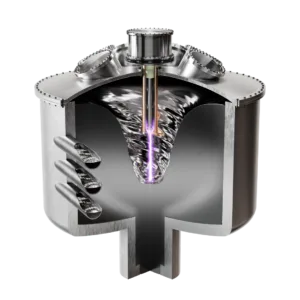
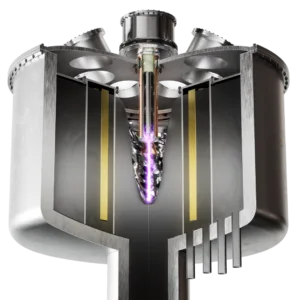
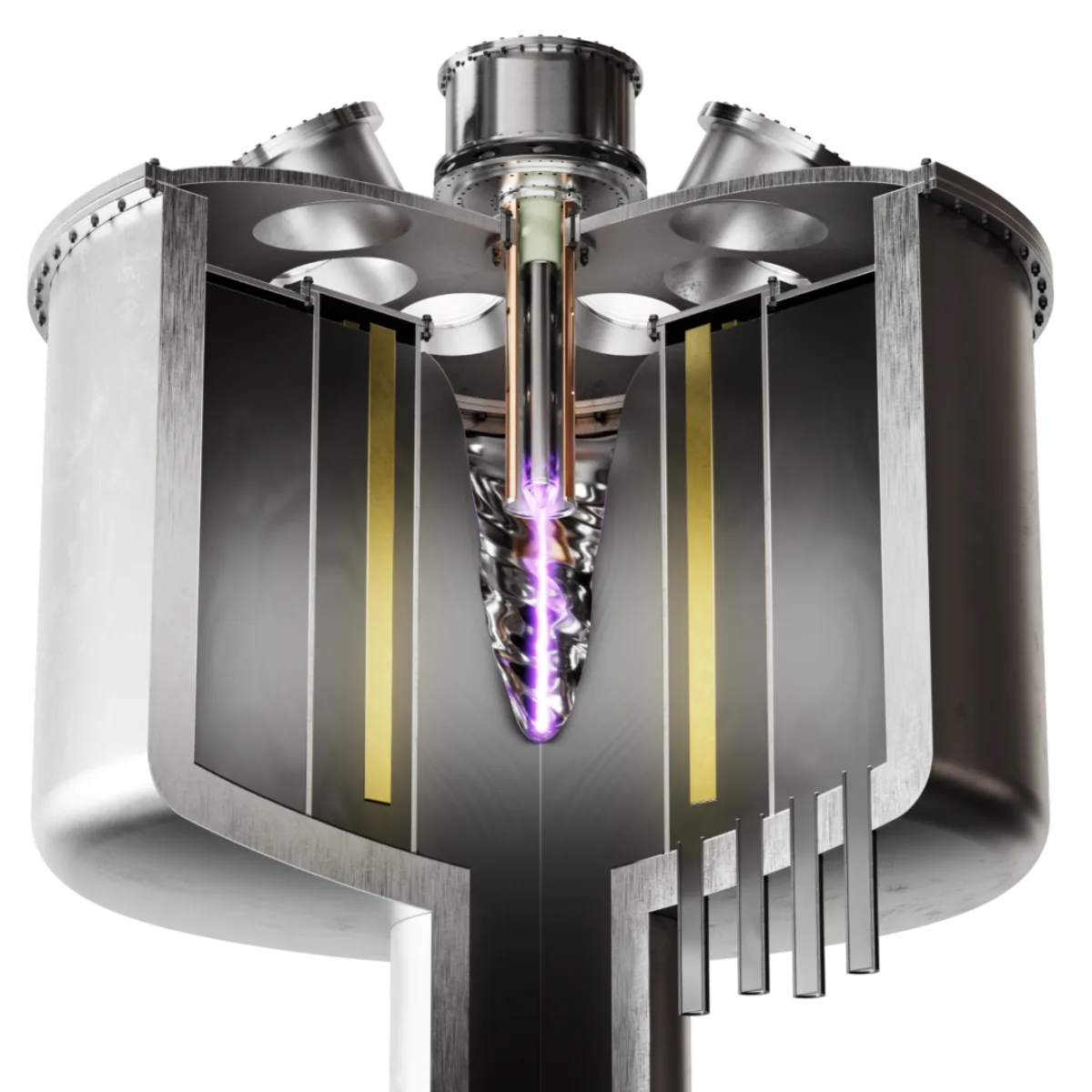
Zap’s sheared-flow-stabilized Z pinch is an ideal fusion configuration for fusion-fission hybridization. Hybrids offer numerous unique applications, including a method of extracting more energy from spent nuclear fuel while simultaneously reducing its radioactive elements.
-
01
Fission fuel embedded in fusion module walls
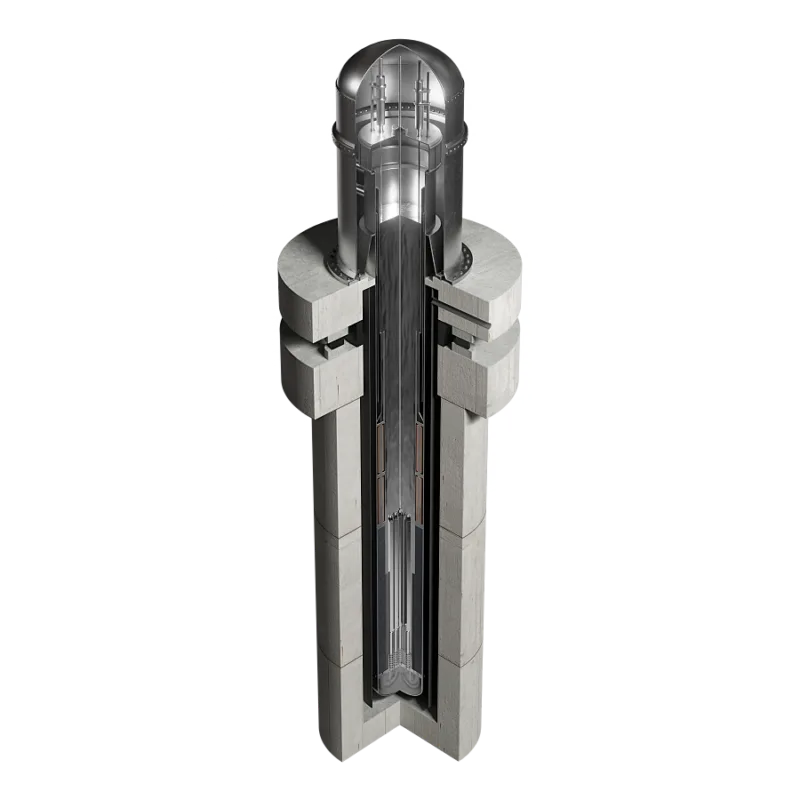
In a fusion-fission hybrid, fission fuel is embedded directly within the liquid metal wall surrounding the fusion core. The fissile material does not need to be enriched and could include spent fuel rods or natural uranium.
-
02
Fusion makes high-energy neutrons
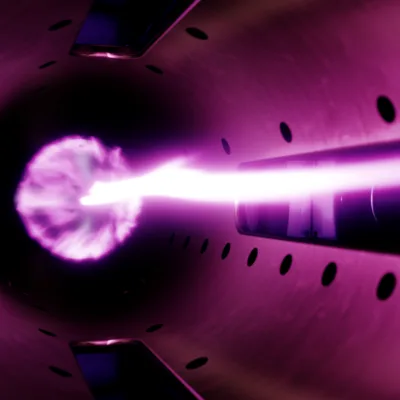
Fusion reactions produce neutrons carrying 14 megaelectronvolts of energy — roughly ten times more energetic than typical fission neutrons. This exceptional energy makes them highly effective at driving reactions in surrounding materials.
-
03
Neutrons collide with fissile fuel in the blanket, producing nuclear reactions
The high-energy fusion neutrons bombard the fission fuel in the wall, triggering additional fission reactions that boost overall energy output without requiring net energy from fusion or sustained fission chain reactions.
-
04
The nuclear reactions burn down long-lived waste products
The reactions break down long-lived radioactive isotopes into shorter-lived or less-harmful elements. This transmutation can dramatically reduce the hazard of nuclear waste and shorten its lifetime by thousands of years.
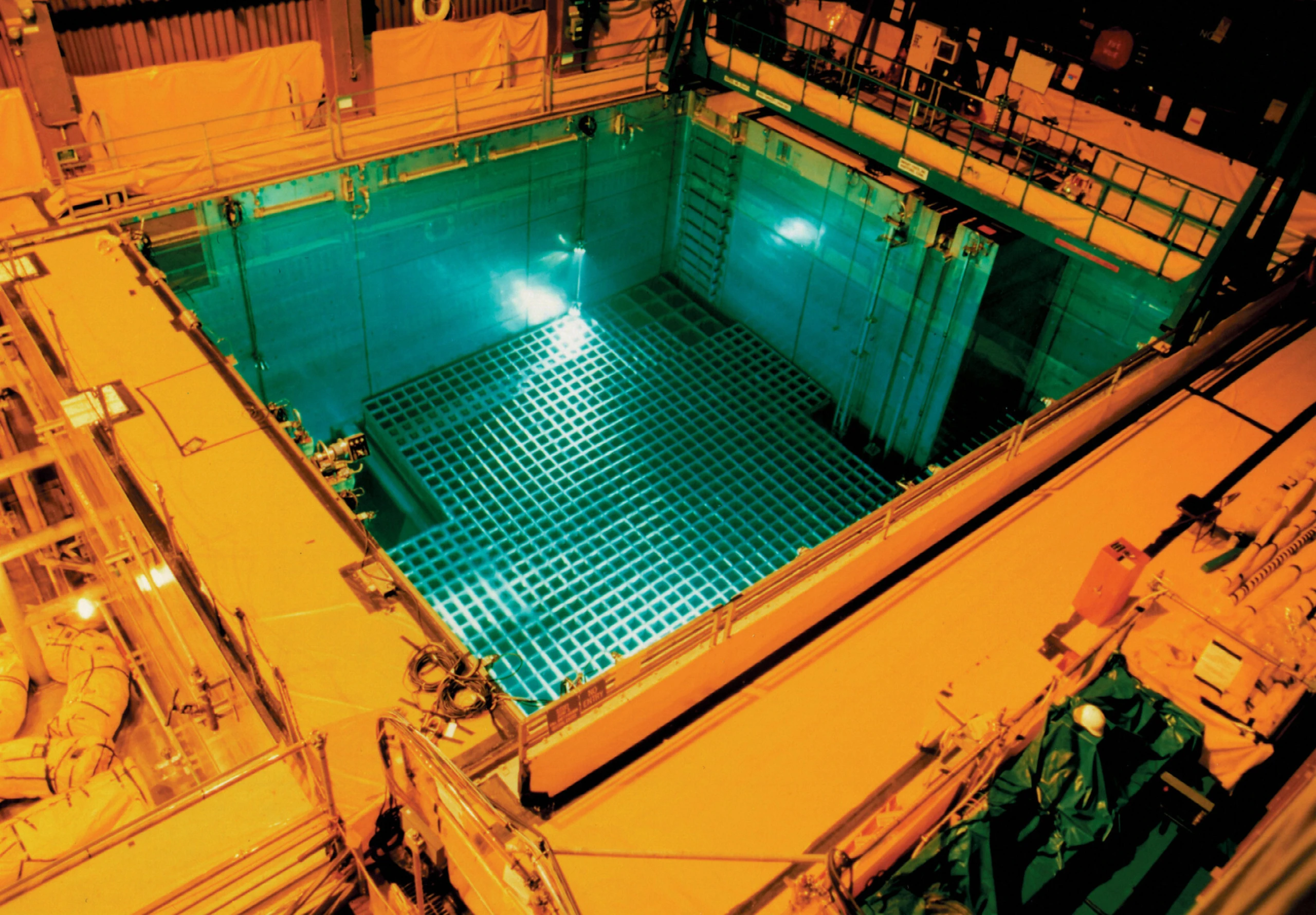
Closing the fuel cycle
The high-energy neutrons produced by fusion can access reactions that conventional reactors cannot. In the future, Zap's hybrid system could transform long-lived nuclear waste into a recoverable energy resource.