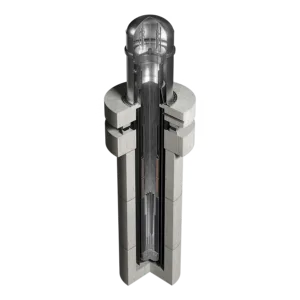
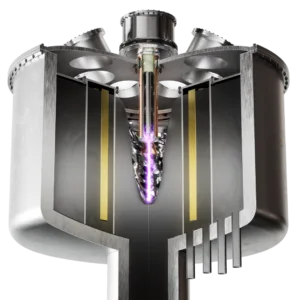
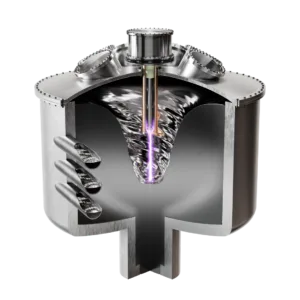
Zap's liquid bismuth loop passes 1,000 hours of flowing operation
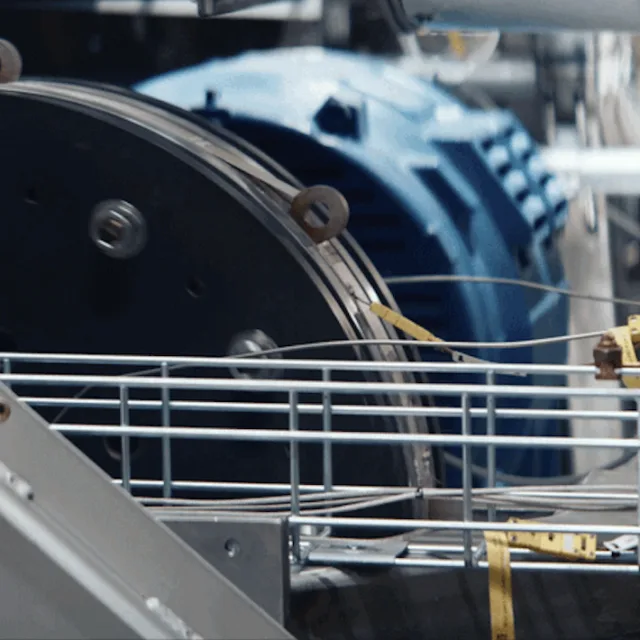
The loop contains one metric ton of molten metal at 400°C and has faced about 3,000 plasma shots to date.
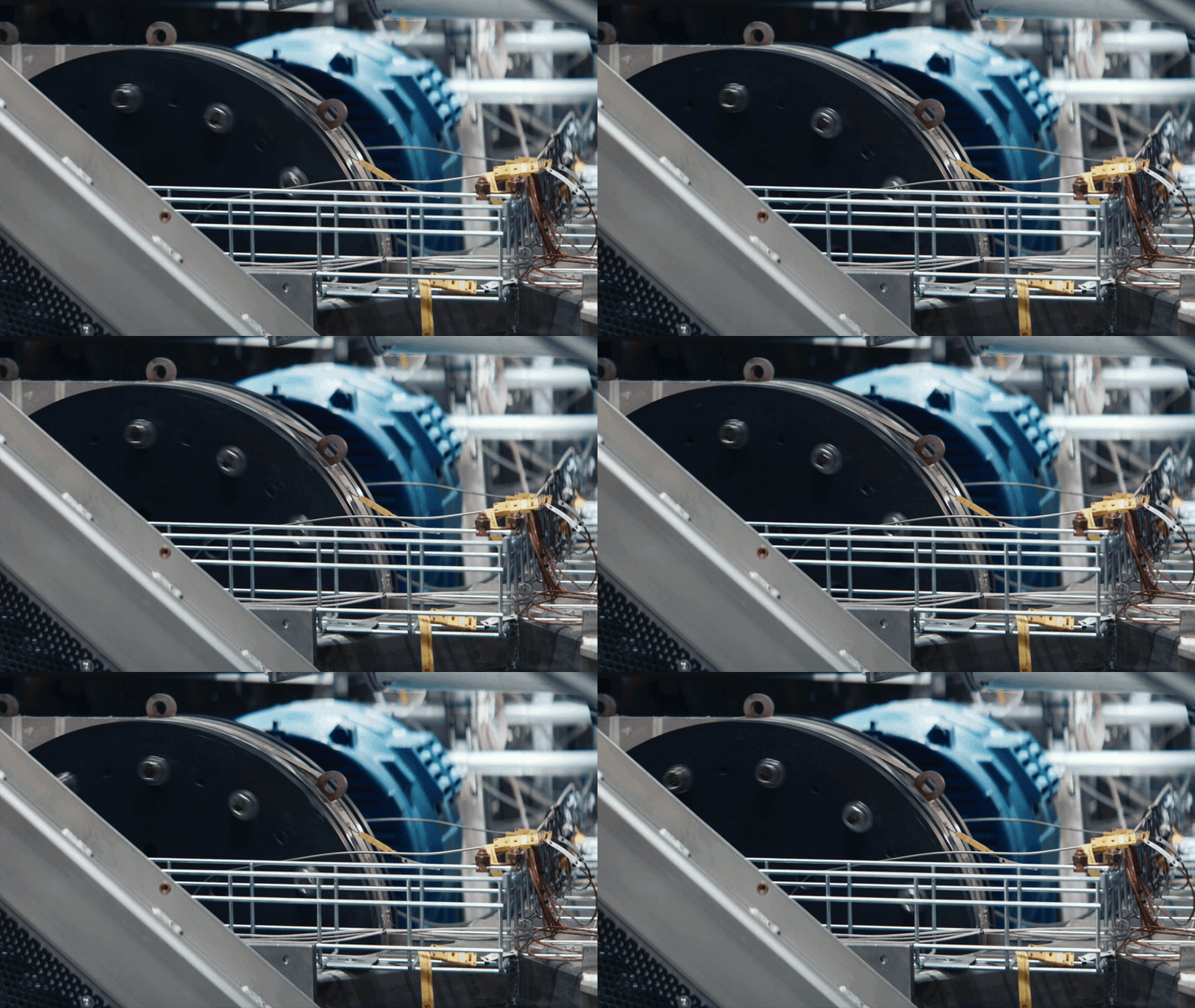
Zap's third-generation liquid bismuth loop has officially passed 1,000 hours of flowing operation: one metric ton of molten metal at 400°C, held under vacuum and running unattended for most of that time, with about 3,000 powered plasma shots into it so far. The loop also hit 5,200 hours of hot standby time waiting to host Z-pinches.
Why liquid metal? Literal tons of hot liquid metal, often under vacuum, is the key coolant across Zap's nuclear portfolio. Sodium cools fission reactors. Lithium breeds tritium, carries heat, and absorbs neutrons in fusion modules. Hybrid fission-fusion designs will likely use both metals. (Bismuth stands in for either while we prove the hardware.)
The principles of managing hot metal are consistent across bismuth, lithium, and sodium, and simple as long as certain cardinal rules are obeyed: the metal must be kept hotter than its melting point (271°C for bismuth) so nothing solidifies in the pipes. Absolutely nothing can leak in or out, so full penetration welds are preferred.
Last month, a local power outage handed Zap a surprise reliability test. When the system lost power in the middle of operations, the freeze protection valve quickly thawed, and gravity drained the liquid metal into a safe condition. No one touched anything. When the power came back on, the team started the system up again without incident.
Zap's first lithium loop starts commissioning later this year and the first sodium loop will follow. A power plant has to operate for decades, but 1,000 hours (about 6 weeks) is a good start.